
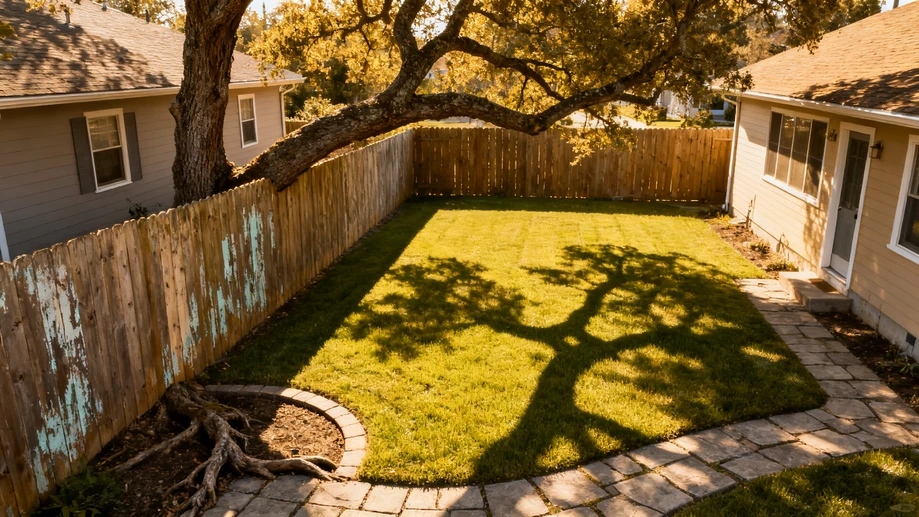
What to Do When Your Neighbor's Tree Invades Your Yard
A practical guide to navigating property line greenery conflicts
That beautiful oak tree shading your patio might be your neighbor's pride and joy, but when its branches start scraping your roof or roots crack your driveway, it becomes a legal headache. Tree disputes between neighbors rank among the most common suburban conflicts, often sparking tensions that could've been avoided with some basic knowledge of property rights. Surprisingly, the law doesn't always side with the tree owner, nor does it automatically grant you permission to grab your chainsaw. Understanding where responsibility lies can save friendships and prevent costly lawsuits.
First, know your boundaries literally. Property lines determine everything in tree law. If the trunk sits entirely on your neighbor's land, it's their tree regardless of where branches or roots wander. You generally have the right to trim encroaching branches up to your property line, but with crucial caveats. Cutting beyond the boundary constitutes trespassing, and reckless trimming that kills the tree could leave you liable for triple the tree's value in many jurisdictions. Always consult a survey map before taking action – guessing property lines is a recipe for disaster.
Roots often cause more damage than branches but receive less attention. When invasive roots buckle your sidewalk or clog sewer lines, the legal approach differs significantly. Unlike branches which you can trim, you typically can't sever major roots without potentially destabilizing the tree. Here, negligence becomes key. If your neighbor knew about destructive roots and ignored them, they might be responsible for damages. Document everything: take timestamped photos of cracks progressing, save repair quotes, and send dated written notices to the tree owner. This paper trail proves crucial if mediation fails.
Now consider the fallen tree scenario. After a storm, whose insurance covers the smashed fence? Location determines responsibility. If healthy trees fall due to "acts of God" like hurricanes, the property where damage occurs usually bears the cost. However, if your neighbor ignored visible rot or dead branches despite your warnings, their negligence shifts liability. One homeowner learned this the hard way when their diseased maple crushed a neighbor's car; the court ordered them to pay $15,000 in damages because they'd dismissed previous concerns about the tree's condition.
Fruit and nuts add another layer of complexity. Can you keep apples falling on your lawn? Generally yes – once produce crosses the property line, it's considered abandoned. But shaking branches to harvest fruit violates the tree owner's rights. One Oregon case saw a neighbor ordered to pay $500 for systematically harvesting cherries from overhanging branches using a rake. The court ruled this exceeded reasonable enjoyment of the fallen fruit. Similarly, toxic berries or thorny branches causing harm might create liability, especially if children are at risk.
Prevention beats litigation every time. Before planting, research species with non-invasive root systems and manageable growth patterns. Bamboo enthusiasts frequently discover too late how rapidly rhizomes spread underground, damaging neighboring foundations. When conflicts arise, propose splitting costs for professional arborists. Certified experts provide neutral assessments of hazards and solutions, often resolving disputes amicably. Many communities offer subsidized mediation services specifically for neighbor disputes – far cheaper than courtroom battles.
Ultimately, communication remains your strongest tool. A polite conversation over coffee might resolve what months of legal letters cannot. One couple avoided a lawsuit by offering to pay half the pruning cost for their neighbor's problematic pine after explaining how its needles clogged their pool. The neighbor appreciated the cooperative approach and later helped install a root barrier. Remember, trees grow slowly but disputes escalate quickly. With clear boundaries and mutual respect, you can protect both your property and neighborhood harmony.